Small resets for everyday life.
Inspired by nature.

Stop Planning, Start Doing: Why Overthinking Can Drain Your Energy
We’ve all been there. You have a great idea, and you’re excited to start. So, you spend hours, days, or even weeks planning every little detail. But by the time you’re done, you feel exhausted—and you haven’t even started the real work yet. Does this sound familiar? The problem is, spending too much time planning can drain your energy. You end up feeling tired and overwhelmed before you’ve even taken the first step. While planning is important, it’s the execution that makes your ideas a reality. So, how do we break this cycle? Let’s explore a few ways to balance planning and action.
2 min read

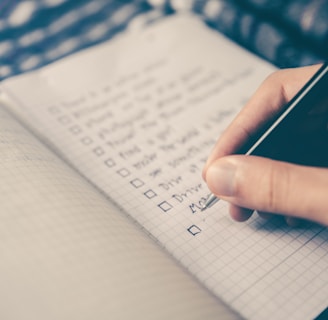
1. Planning is Good, But Don’t Overdo It
Planning helps us organize our thoughts and prepare for what’s ahead. However, too much planning can lead to something called analysis paralysis. This is when you spend so much time thinking about what could go wrong or how to make everything perfect that you never actually start.
It’s important to remind yourself: perfection doesn’t exist. You don’t need to have everything figured out before you start. Sometimes, the best way to learn is by doing.
2. Set a Time Limit for Planning
One way to avoid over-planning is to set a time limit. Give yourself a reasonable amount of time to outline your ideas, and then commit to starting, no matter what. For example, spend one hour planning your next project, then immediately begin taking action. This helps you move from thinking to doing.
Research shows that people who act quickly after making decisions are more likely to follow through with their goals (Higgins, 2012). So, once you have a basic plan, jump into action without delay.
3. Break Your Work Into Small Steps
Sometimes, we get stuck in the planning phase because the project feels too big. When something feels overwhelming, it’s easy to keep thinking about it instead of doing it. The solution? Break it down into smaller steps.
For example, instead of saying, "I need to start a YouTube channel," break it down into steps like:
Choose a topic for your first video.
Write a script.
Set up your camera or phone.
Record your first video.
By focusing on small, manageable tasks, you can make progress without feeling overwhelmed.
4. Take Action, Learn as You Go
Many people avoid taking action because they’re afraid of making mistakes. But the truth is, you’re going to make mistakes, and that’s okay. Every mistake is a chance to learn and improve. Instead of trying to plan everything perfectly, accept that mistakes are part of the process.
A study by Baumeister et al. (2000) suggests that taking action, even with mistakes, builds confidence and momentum. The more you do, the more you learn, and the better you get.
5. Use the 80/20 Rule
The 80/20 rule (also known as the Pareto Principle) states that 80% of your results come from 20% of your efforts. This means you don’t have to do everything perfectly to succeed. Focus on the few important actions that will give you the biggest results, and let go of the rest.
For example, if you’re starting a blog, the most important thing is to write your first post. You don’t need to spend weeks designing the perfect website before you start. Get your content out there first, and you can improve the design later.
In Conclusion: Don’t Let Planning Drain You
While planning is a useful tool, spending too much time on it can lead to exhaustion and procrastination. The key is to find a balance—plan enough to get started, and then dive into action. Remember, it’s in the doing where the real progress happens.
References:
Baumeister, R. F., Heatherton, T. F., & Tice, D. M. (2000). Losing control: How and why people fail at self-regulation. Academic Press.
Higgins, E. T. (2012). Beyond pleasure and pain: How motivation works. Oxford University Press.
By taking small steps and learning as you go, you can make your ideas come to life. Stop planning your way into exhaustion, and start acting today!
Pause. Breathe. Reset.
© 2026 My10Min · Based in Switzerland
my10min@gmail.com